
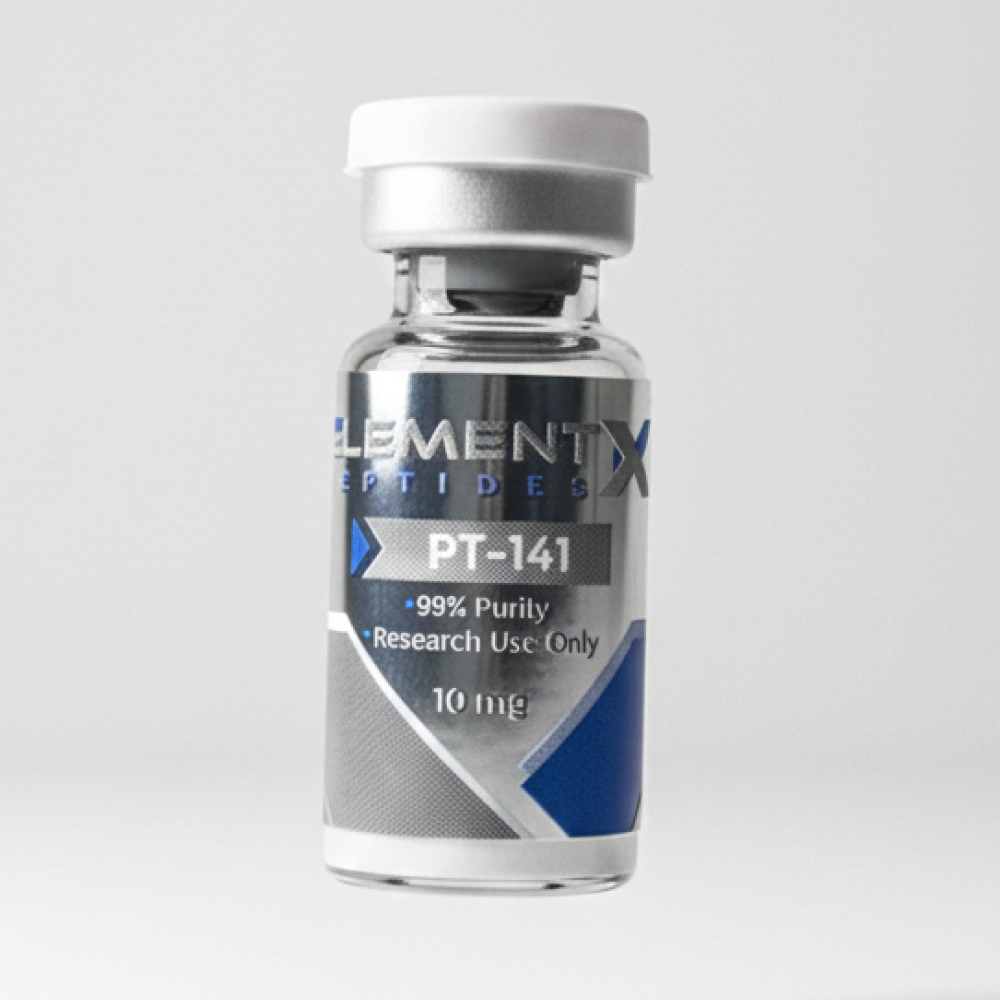
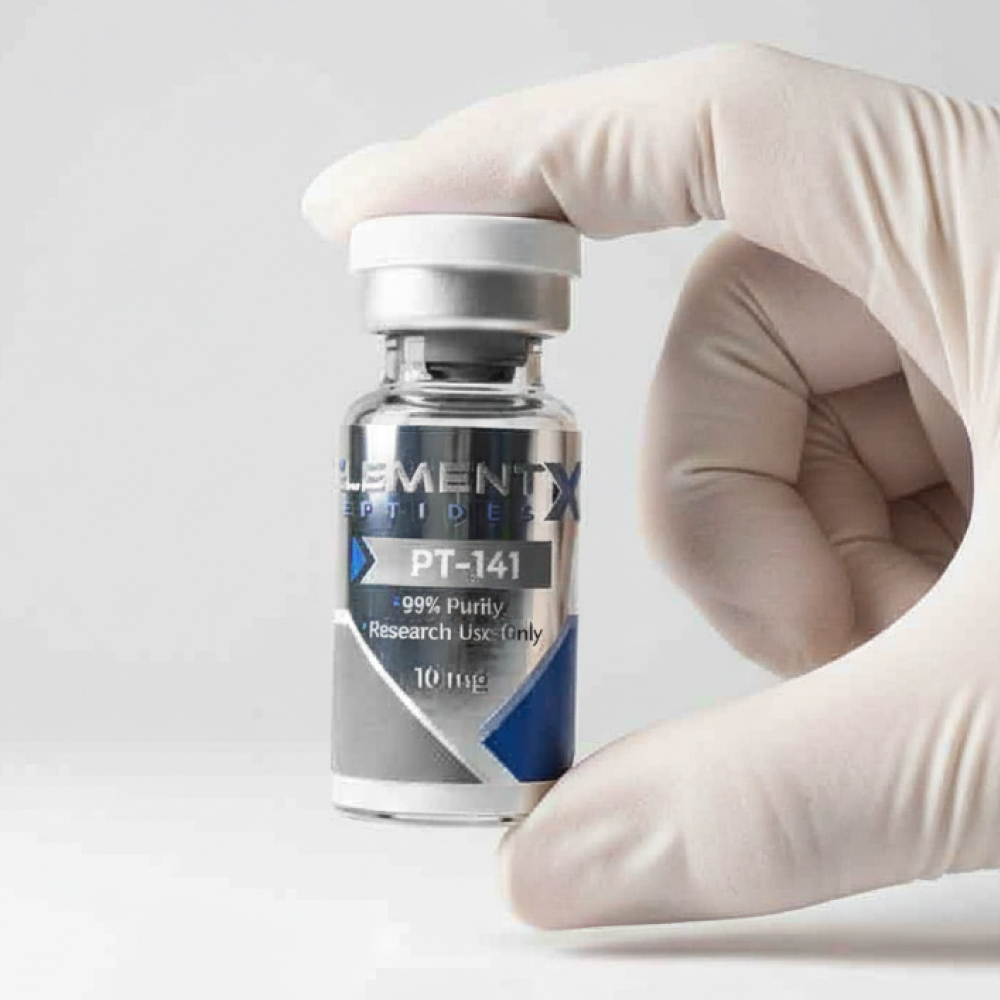
PT-141 (Bremelanotide) is a synthetic cyclic melanocortin-receptor research peptide derived from the α-MSH (alpha-melanocyte-stimulating hormone) family. It is widely used in controlled in-vitro laboratory studies to investigate melanocortin receptor signalling, receptor subtype selectivity, and downstream second-messenger pathways under non-clinical research conditions.
As a melanocortin analogue, PT-141 enables precise exploration of receptor–ligand interactions and intracellular signalling mechanisms associated with the melanocortin system, supporting advanced research in neuroendocrine and molecular signalling models.
Product name: PT-141
Synonyms: Bremelanotide; SZT-brem; melanocortin analogue
Class: Cyclic heptapeptide analogue of α-MSH (melanocortin family)
CAS (reference): 189691-06-3
Form: Lyophilised powder
Unit size: 10 mg
Appearance: White to off-white solid
All products are manufactured exclusively for controlled laboratory research and development applications.
Not for human or animal use.
🧪 Melanocortin Receptor Signalling Studies
Investigation of MC receptor activation and selectivity
Ligand–receptor interaction analysis
⚗️ Second-Messenger Pathway Research
Evaluation of cAMP-dependent signalling cascades
Mapping intracellular response mechanisms
🧩 Neuroendocrine Signalling Models
In-vitro exploration of melanocortin system function
Support for central and peripheral signalling studies
🔒 Peptide Stability & Integrity Testing
Assessment of chemical and enzymatic stability
Degradation profiling under experimental conditions
📦 Formulation & Delivery Research
Compatibility testing with research-grade excipients
Evaluation of carrier systems for experimental applications
🧬 Cell-Based & Molecular Assays
Use in receptor-expressing cell lines
Support for mechanistic and translational research models