
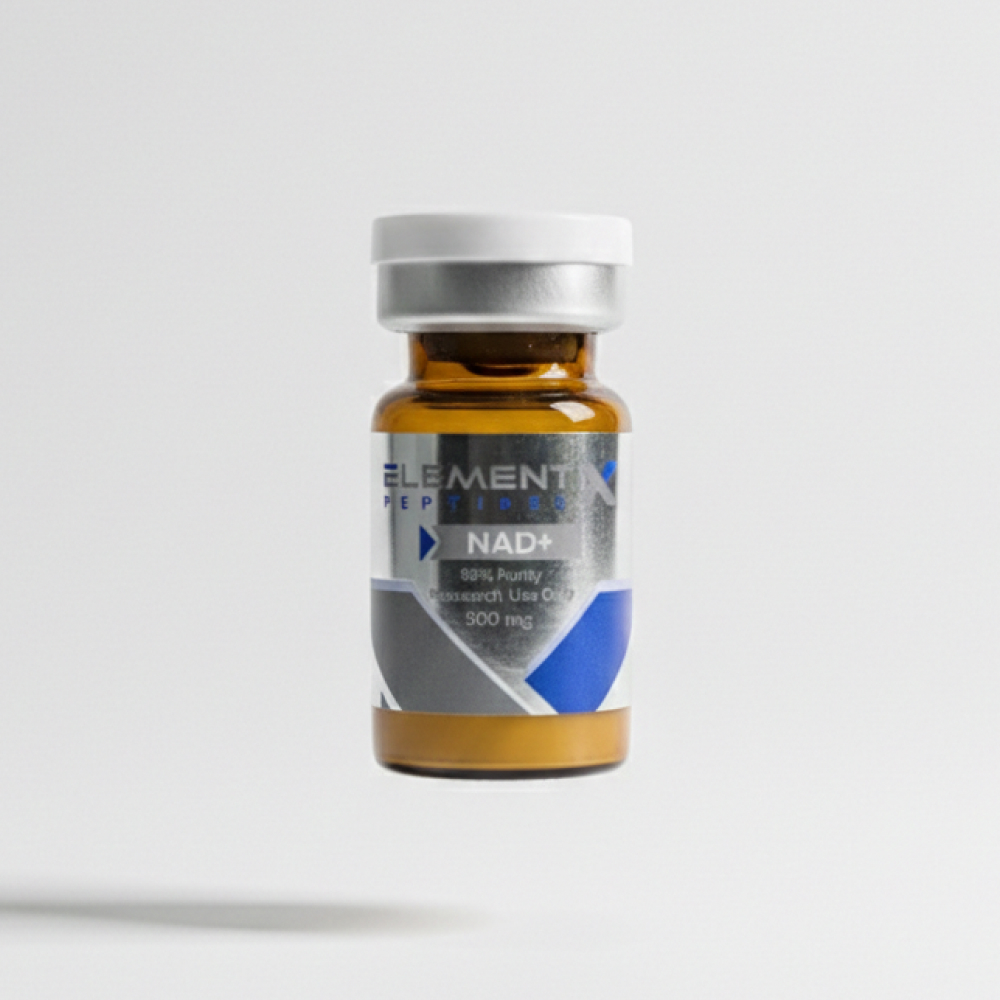
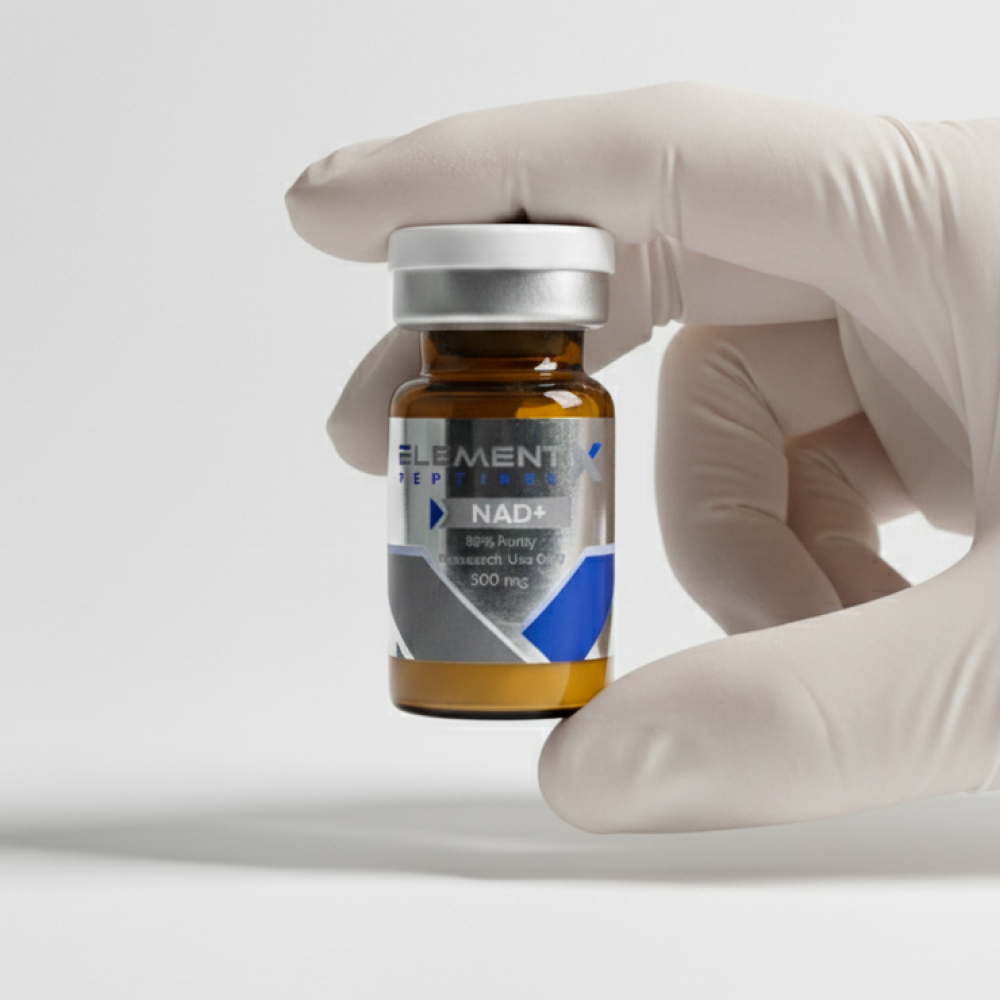
NAD+ (Nicotinamide Adenine Dinucleotide) is a ubiquitous redox coenzyme essential to cellular metabolism and widely used in controlled in-vitro laboratory studies. It plays a central role in electron-transfer reactions, enabling research into dehydrogenase activity, oxidative phosphorylation, and cofactor-dependent signalling pathways under non-clinical research conditions.
As a fundamental metabolic cofactor, NAD+ supports advanced investigation of cellular energy production, redox balance, and enzymatic regulation, making it a core material in metabolism, aging, and molecular biology research models.
Product name: NAD+ (Nicotinamide Adenine Dinucleotide, oxidised)
Synonyms: Coenzyme I; DPN+; Diphosphopyridine Nucleotide (oxidised)
Molecular formula (free acid, reference): C21H27N7O14P2
Molecular weight (free acid, reference): ~663.4 g/mol
CAS (reference): 53-84-9
Form: Lyophilised powder
Appearance: White to off-white solid
Note: Exact properties may vary depending on salt form (e.g., disodium salt) or hydration state
All products are produced exclusively for controlled laboratory research and development applications.
Not for human or animal use.
🧪 Redox & Enzymatic Activity Studies
Investigation of oxidation–reduction reactions
Analysis of NAD+-dependent dehydrogenase activity
⚗️ Cellular Metabolism Research
Evaluation of metabolic flux and energy pathways
Support for glycolysis, TCA cycle, and oxidative phosphorylation models
🧩 Sirtuin & NAD+-Dependent Signalling
Research into sirtuin activation and regulation
Exploration of cofactor-driven signalling mechanisms
🔒 Stability & Degradation Testing
Assessment of chemical and thermal stability
Evaluation of coenzyme integrity under experimental conditions
📦 Formulation & Compatibility Research
Compatibility testing with buffers and excipients
Evaluation of NAD+ behaviour in research-grade formulations
🧬 Cell-Based & Molecular Assays
Use in in-vitro enzymatic and cellular systems
Support for mechanistic and translational research studies