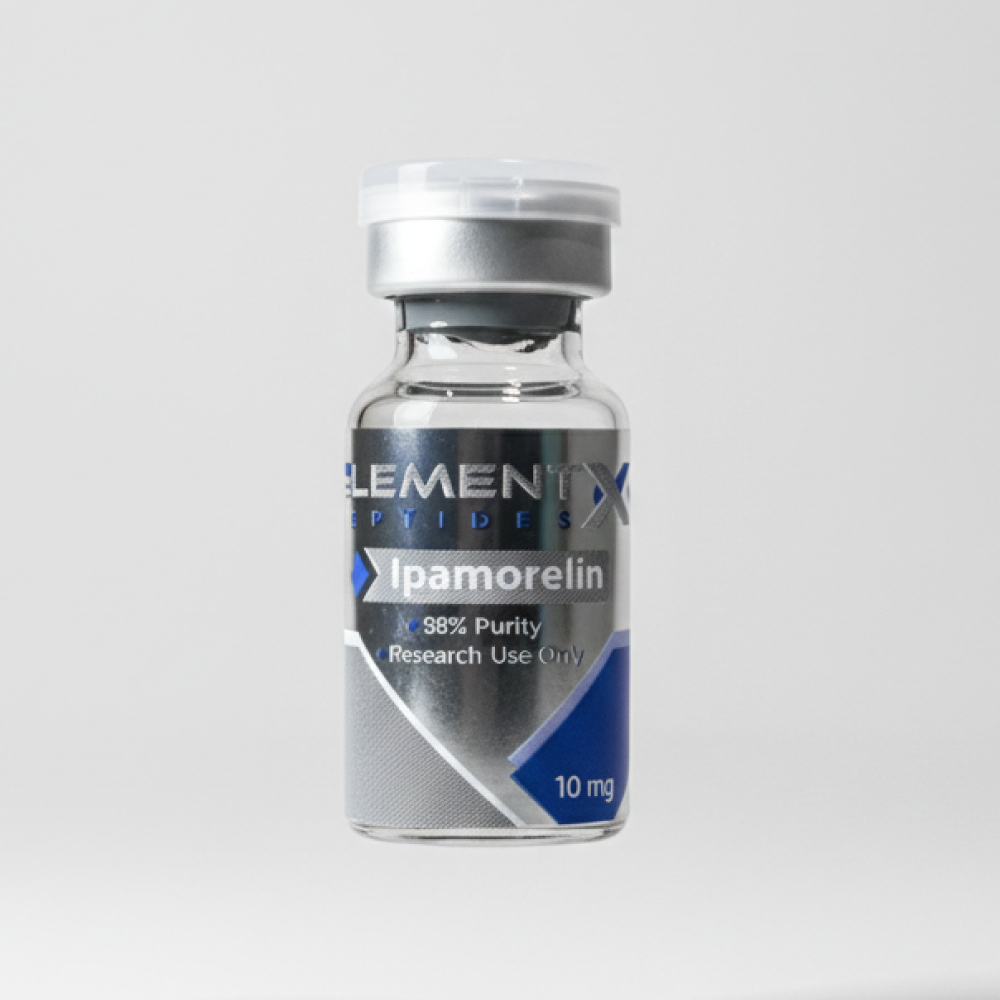
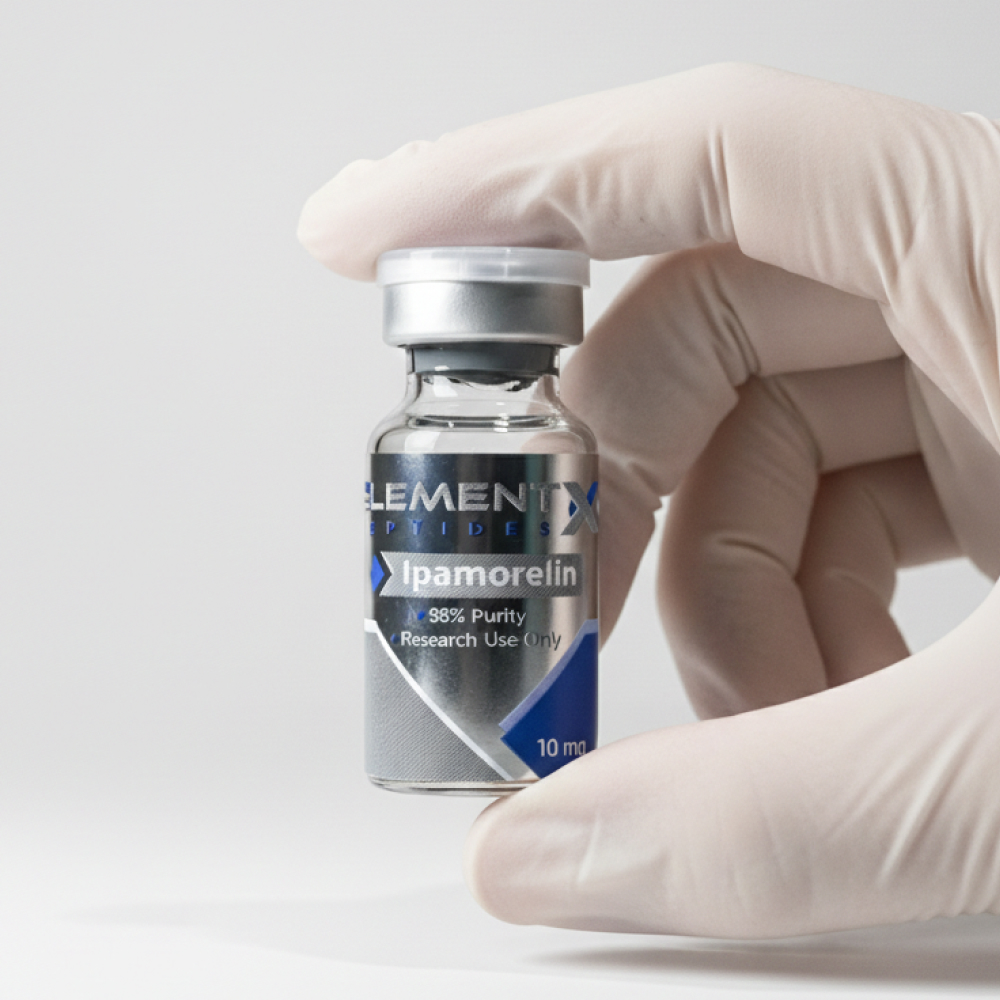
Ipamorelin – Research Grade Peptide
Ipamorelin is a selective growth hormone secretagogue and GHSR-1a (ghrelin receptor) agonist, widely used in controlled in-vitro laboratory studies to investigate receptor signalling, second-messenger dynamics, and experimental growth hormone (GH) axis pathway modelling under non-clinical research conditions.
Due to its high receptor selectivity, Ipamorelin is a valuable research tool for exploring ghrelin-mediated signalling mechanisms, intracellular response pathways, and neuroendocrine regulation of GH secretion in controlled laboratory environments.
Product Information
-
Product name: Ipamorelin
-
Synonyms: GHSR agonist; growth hormone secretagogue
-
Sequence (reference): Aib–His–D-2-Nal–D-Phe–Lys–NH₂
(Aib = 2-aminoisobutyric acid; 2-Nal = 3-(2-naphthyl)-D-alanine)
-
Class: Pentapeptide secretagogue (ghrelin/secretagogue receptor agonist)
-
Form: Lyophilised powder
-
Appearance: White to off-white solid
-
Note: Counter-ion and hydration state may vary
⚠️ Important Notice
All products are manufactured exclusively for controlled laboratory research and development applications.
Not for human or animal use.
🔬 Suitable R&D Applications
🧪 Ghrelin Receptor Signalling Studies
⚗️ Second-Messenger Pathway Research
🧩 Growth Hormone Axis Modelling
🔒 Peptide Stability & Degradation Testing
📦 Formulation & Compatibility Research
🧬 Cell-Based & Molecular Assays